
Owner-Occupied Financing for a Partly Leased Building
How established businesses can assess a building with outside tenants, including usable space, financing requirements and the rental income lost when the business expands.
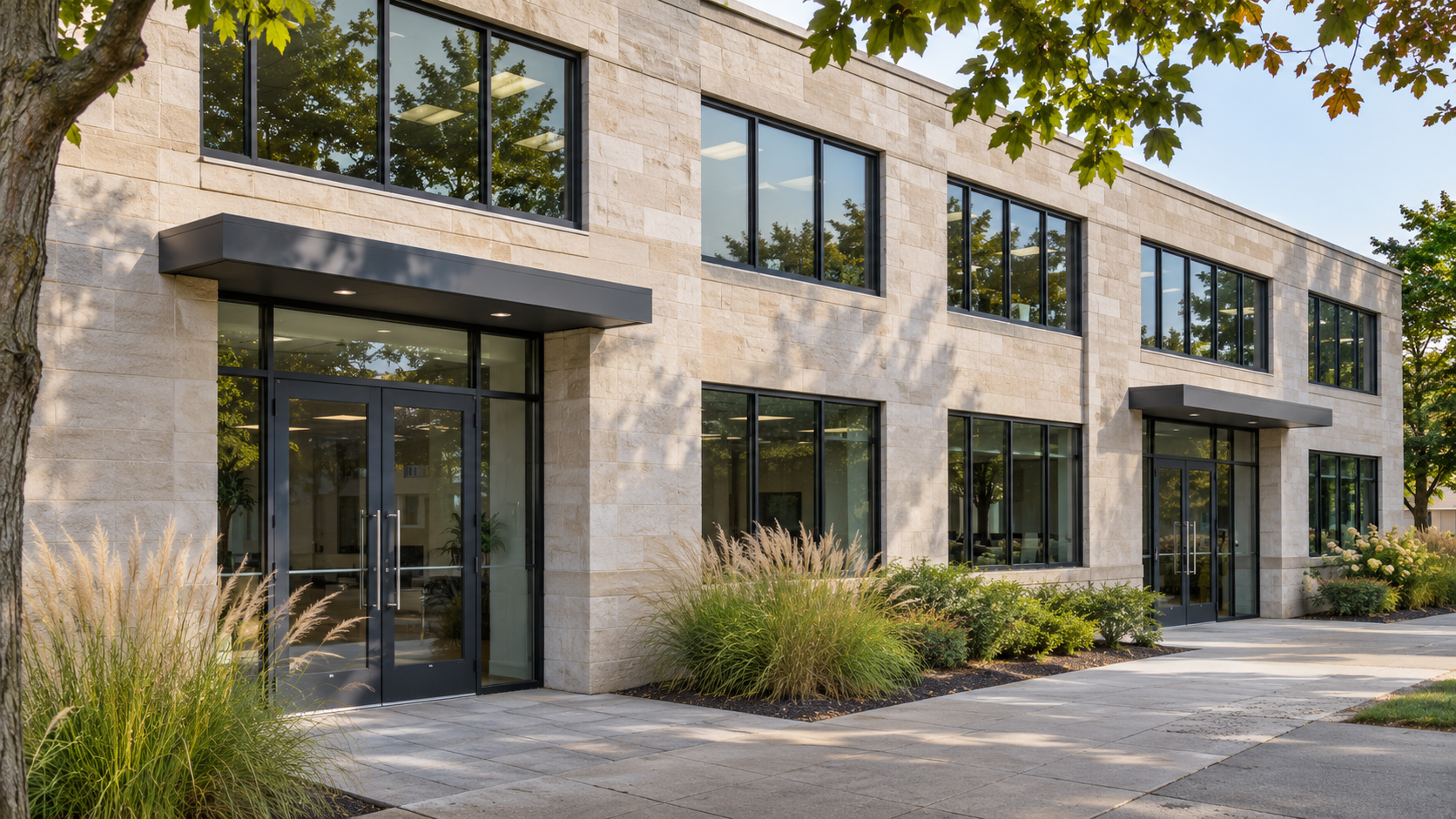
Buying a building with tenants can give an established business room to grow and rental income to offset some ownership costs. Those advantages can also compete: space producing rent today may be the space your company needs next year.
Owner-occupied financing for a partly leased building should reflect both uses. Before committing to the purchase, establish which areas your business can actually occupy, how the existing leases affect that plan and what would support repayment if the rental income changed.
Buy the space your business can use
Start with a floor plan showing your intended operating space, areas leased to others and any vacant areas. Compare that layout with the way the business works. Access, loading, customer entrances, parking and shared facilities can matter as much as the total square footage.
Separate space available at closing from space that becomes available later. A tenant’s lease expiration may not be the only relevant date: renewal options or other provisions could affect the owner’s ability to use the premises. Have qualified counsel review the leases and confirm what the purchase would mean for possession.
A building that provides enough space only after a tenant leaves presents a different acquisition decision from one ready for your business immediately. Account for any continued rent at your old location and the work needed before occupying the new premises. The broader business property purchase guide covers those ownership and transition costs.
Confirm the occupancy requirement for the proposed financing
For SBA financing used to acquire, renovate or reconstruct an existing building, the rule applies to both 7(a) and 504: the borrower must permanently occupy and use at least 51% of the rentable property, and may permanently lease up to 49% to others. New construction follows different occupancy and expansion rules. 13 CFR 120.131.
This makes a partly leased existing building a possibility for review; it does not establish that the borrower or project qualifies. Ask the lender, and the Certified Development Company where applicable, to confirm the rentable-area calculation, the proposed occupancy and when that occupancy must be achieved. If a separate entity will own the property, include that structure in the review.
Do not treat a listing’s square footage or a plan to use vacant space someday as a completed eligibility assessment. Equally, do not assume the SBA percentage is every conventional property lender’s rule. Establish the requirements for the financing actually being considered before relying on it in the purchase plan.
Assess rental income alongside the operating business
The OCC’s commercial real estate handbook explains that repayment for owner-occupied property usually depends on cash generated by the occupying business. It also calls for scrutiny of rental income, expenses, lease terms and vacancies. A valuable property and a tenant schedule do not replace that repayment analysis. OCC: Commercial Real Estate Lending.
Identify which rents are being collected, which are contractually scheduled and which depend on a future letting. Review who pays utilities, maintenance, insurance and other property expenses under each lease. Gross rent should not be treated as an equal reduction in the mortgage payment without considering the costs attached to earning it.
Ask how the proposed lender treats the business’s earnings and outside rents. Then consider whether the business could carry a temporary vacancy or collection shortfall alongside its own obligations. Our lease-expiration financing article explains the cash costs of tenant turnover.
If you have found a partly leased property, discuss the purchase with Sussex Capital. Share the approximate price, the space your business needs and what is known about the existing tenants. You can start before every lease or final project cost has been assembled.
Compare financing against the whole purchase
Conventional commercial real estate financing may be worth considering based on the property, business and provider’s assessment. Compare the cash contribution, repayment schedule, guarantees, conditions and any restrictions affecting future changes in occupancy or leasing.
For an eligible SBA request, 7(a) financing can accommodate real estate and other permitted business uses, including working capital. 504 financing supports qualifying fixed assets through a Certified Development Company working with a senior lender; its proceeds cannot fund working capital or inventory. Each structure still requires its own eligibility and credit review.
Separate the purchase price, improvements for your business, work associated with rental space, transaction costs and operating cash. Have the provider confirm which costs can be included and which require other funds. A proposal that finances the building may still leave the company responsible for substantial payments before the move.
Price the space you intend to take back
If future expansion is part of the reason for buying, prepare a second version of the cash plan for the point when your business occupies more space. Remove rent from the area it will take over, reflect the expenses that change and add any necessary adaptation costs.
Do not assume the business keeps the tenant income while also gaining the same space. Nor should projected growth be treated as certain repayment capacity before it occurs. Compare the larger purchase with a smaller property or continued leasing if the larger building requires rental income that the expansion plan would eliminate.
Sussex Capital is a commercial finance brokerage and private credit intermediary for established U.S. businesses. We help identify potential structures, organize business and property information and coordinate provider review. Explore our commercial financing solutions, or start a financing request for the premises you plan to occupy. Include the intended use and tenant arrangements so the financing discussion addresses the property your business will actually operate from.
Sources & further reading
Put your financing plans into motion
Tell Sussex Capital about your established business, how much capital you need, and what you want it to accomplish.
Start your applicationFinancing is subject to provider review, eligibility, and terms.